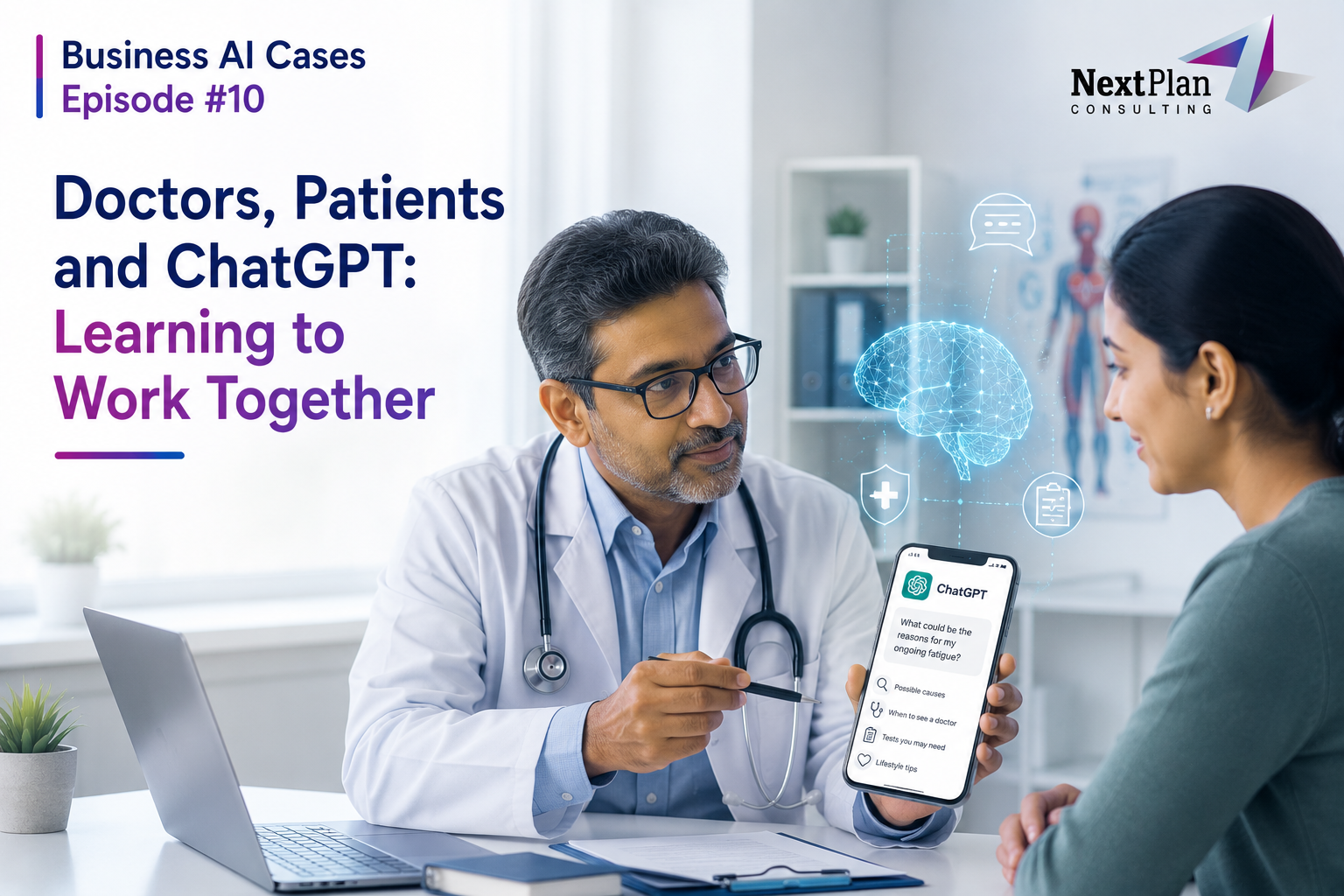
For years, doctors have answered patients' questions during consultations.
Today, patients often arrive after asking another expert first.
ChatGPT. This is no longer an emerging trend. It is already happening at scale.
OpenAI recently announced Health in ChatGPT, and reports that people now ask hundreds of crores of health-related questions every week. Patients are increasingly using AI to understand symptoms, interpret laboratory reports and prepare questions before visiting a doctor.
Interestingly, hospitals are not responding by discouraging AI. Many are learning how to work with it. Take New York University Langone Health.
Instead of replacing physicians, the hospital introduced generative AI to prepare first drafts of replies to patient portal messages. Doctors remain fully responsible for reviewing, editing and approving every response.
The objective is simple. Reduce administrative burden while allowing doctors to spend more time thinking, explaining and caring.
One finding was particularly interesting. Physicians preferred concise, information-rich drafts, while nursing teams valued more empathetic language.
The lesson? AI must adapt to clinical workflows—not the other way around.
Similar work is underway at the University of Pennsylvania, where researchers compared AI-generated patient responses with real physician responses across different types of patient questions. Rather than asking whether AI should replace doctors, the research asks a much better question: Where can AI support doctors while preserving empathy, accuracy and trust?
For Indian healthcare, this may be the real opportunity. Patients will continue using AI. Many consultations may soon begin with: "ChatGPT suggested this..."
Instead of viewing this as a challenge, doctors can use it as the starting point for a richer clinical conversation. The physician's role shifts from being the only source of information to becoming the trusted interpreter of information.
That distinction matters. Information is becoming abundant. Judgment remains scarce.
There is another implication for pharmaceutical companies.
Medical Representatives, Medical Affairs teams and Patient Support Programs must also evolve. Future conversations will not revolve around providing information that patients cannot find. They will revolve around helping physicians and patients interpret that information responsibly.
Perhaps the future of healthcare is not about AI replacing doctors.
It is about AI strengthening one of medicine's oldest assets: Trust.
And in an age where every patient has information in their pocket, trust may become the most valuable prescription a doctor can offer.