What becomes possible now that was difficult—or impossible—before?
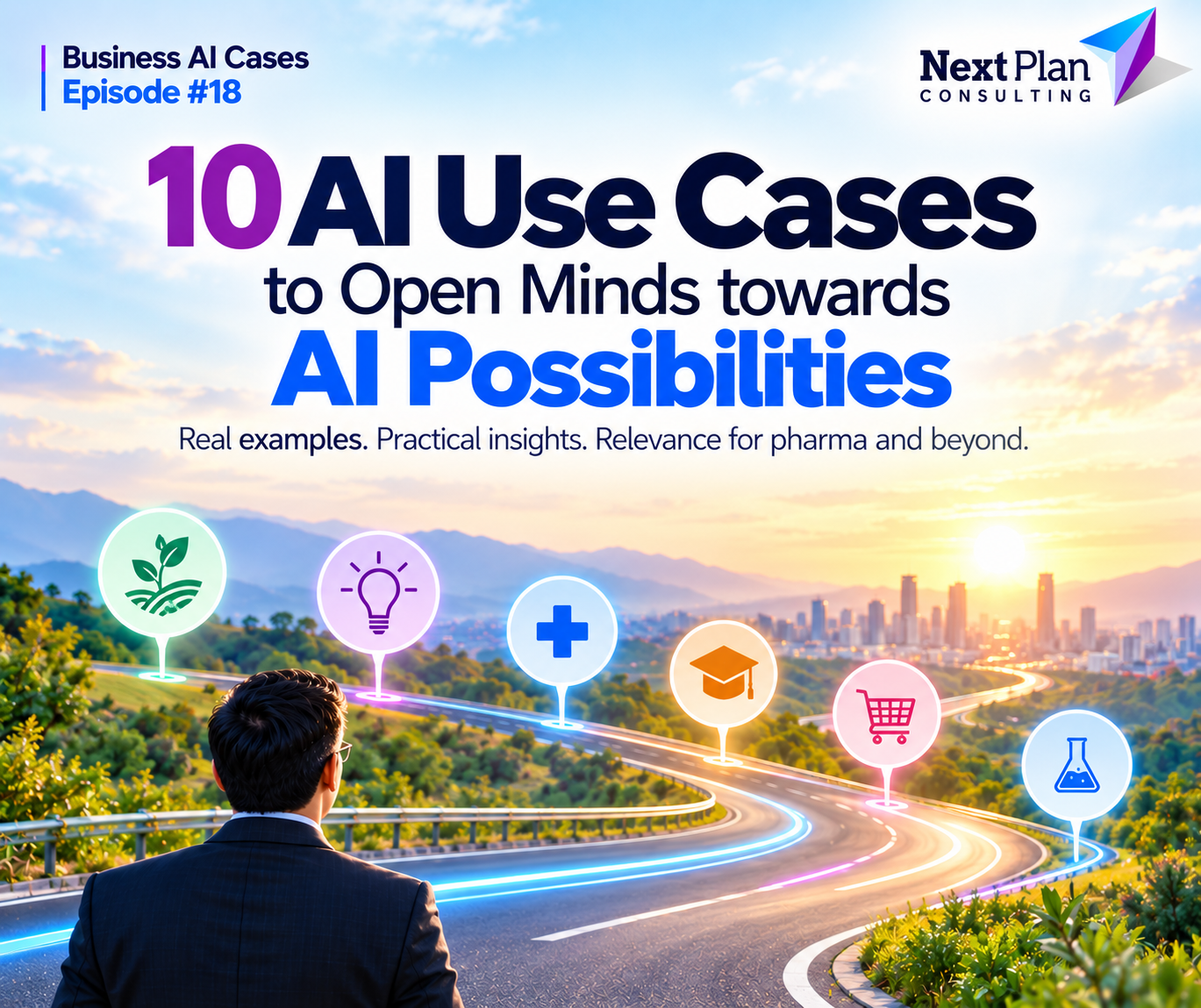
Collection of AI Use Cases to Open Minds towards Possibilities
Over the past few months, through our Business AI Cases series, we have deliberately travelled across industries and applications. Because sometimes the best way to understand AI is not to start with the technology. Start with what somebody has already done with it.
Consider some of the cases we explored.
Amul's Sarlaben (Episode#2) showed how AI can combine large amounts of farmer, cattle and veterinary data to provide useful guidance to millions of dairy farmers. Advertising demonstrated how AI can change the economics of creativity and content creation (Episode#3). Education showed us the possibility of personalized learning, with AI adapting to the learner rather than everyone following exactly the same journey (Episode #5). Cadbury demonstrated mass customization—creating communication at a scale that would have been difficult to imagine earlier (Episode#6). Recommendation engines showed how platforms can decide what each individual customer should see next, potentially influencing discovery, basket size, repeat purchase and even brand choice (Episode#7).
We then moved closer to pharmaceuticals.
AI could potentially accelerate R&D, shortening development cycles and consequently changing the competitive clock for commercial teams. (Episode #8) Combining LLMs with proprietary databases, RAG, APIs and AI agents showed another progression—from AI that provides answers to AI that helps deliver outcomes.
And healthcare demonstrated something equally important: patients themselves are becoming AI-enabled. The future doctor-patient relationship may therefore involve a better-informed patient and a doctor increasingly playing the role of trusted interpreter (Episode #10).
These applications appear very different. But together they teach us something important. Use cases open our minds to opportunities.
A dairy application can trigger an idea for patient support.
A recommendation engine can make us rethink pharmaceutical e-commerce.
Mass customization can inspire better doctor communication.
AI-powered learning can change sales-force capability building.
We should therefore not ask only: “Where can we use AI in our existing processes?”
We should also ask: “What becomes possible now that was difficult—or impossible—before?”
At NextPlan, our Business AI Cases journey is partly about answering that question, particularly for the pharmaceutical and healthcare industry. The objective is not to chase every new AI tool. It is to continuously expand our imagination of what AI could make possible.