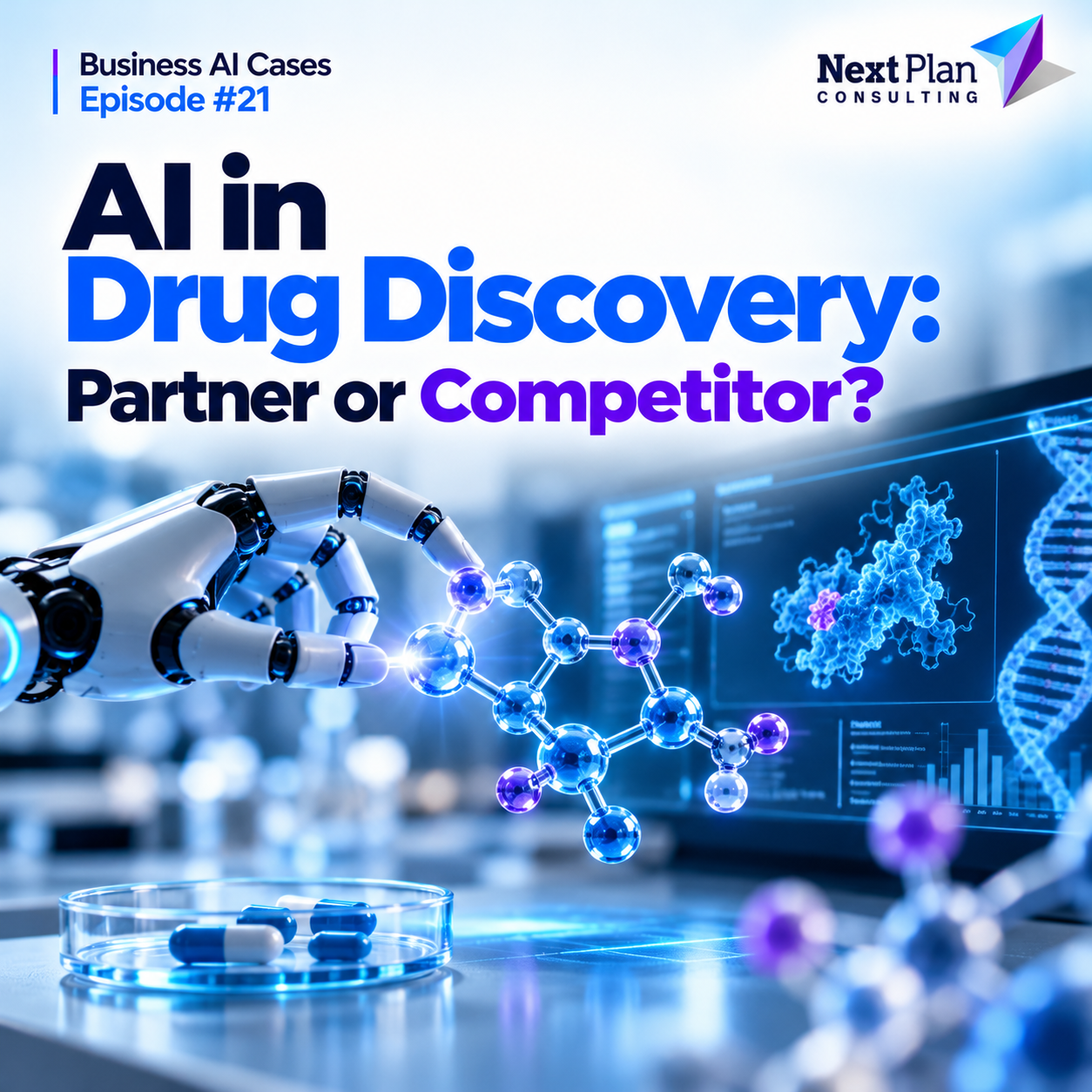
Will AI help existing pharmaceutical companies discover medicines faster—or create an entirely new generation of competitors?
A recent article by Anthropic, the company behind Claude, offers fascinating insights into how AI could transform drug discovery. Traditionally, discovering a new medicine requires enormous scientific effort, substantial investment and many years of development. AI could fundamentally change this equation.
Anthropic has been working with six organisations, including Bristol Myers Squibb, Generate Biomedicines, Enveda and BigHat Biosciences.
Some early results are remarkable. At Divergence Labs, Claude helped generate approximately 35,000 antibody designs in one month, identifying promising candidates for treating food allergies. At Enveda, AI-assisted review of manufacturing documentation reduced human review time by 89%. At Generate Biomedicines, Claude helped design a substantially shorter genetic component for CAR T-cell therapy, producing encouraging laboratory results.
These examples suggest that AI's contribution extends far beyond identifying molecules. It can support target identification, molecule design, optimisation, manufacturing, regulatory documentation and clinical trial planning.
Most interesting development may be elsewhere.
Anthropic has acquired Mithril Medicine, a one-person company researching treatments for rare childhood muscular dystrophies. Its founder used Claude to coordinate experiments, contracts and work across 11 external laboratories.
This raises two important questions.
First: Could AI make drug development commercially feasible for diseases affecting relatively small patient populations? If research and operational costs fall significantly, programmes previously considered economically unattractive may become worth pursuing. Second: Will AI companies remain technology partners—or become pharmaceutical innovators themselves? Anthropic is already exploring both possibilities.
What does this mean for Indian pharmaceutical companies?
Three possibilities deserve attention:
More in-licensing opportunities as AI-enabled biotechnology companies generate additional drug candidates. New R&D partnerships with AI companies and specialised discovery organisations. Greater competitive pressure as smaller innovators potentially move faster and operate at lower costs.
Of course, these are early, largely preclinical results. Human trials, regulatory approvals and commercial success remain major challenges. Nevertheless, the direction is significant. AI may not simply improve the economics of drug discovery. It could change who participates in discovery, who owns innovation and how pharmaceutical companies compete. For Indian pharma leaders, this is an opportunity worth examining now.