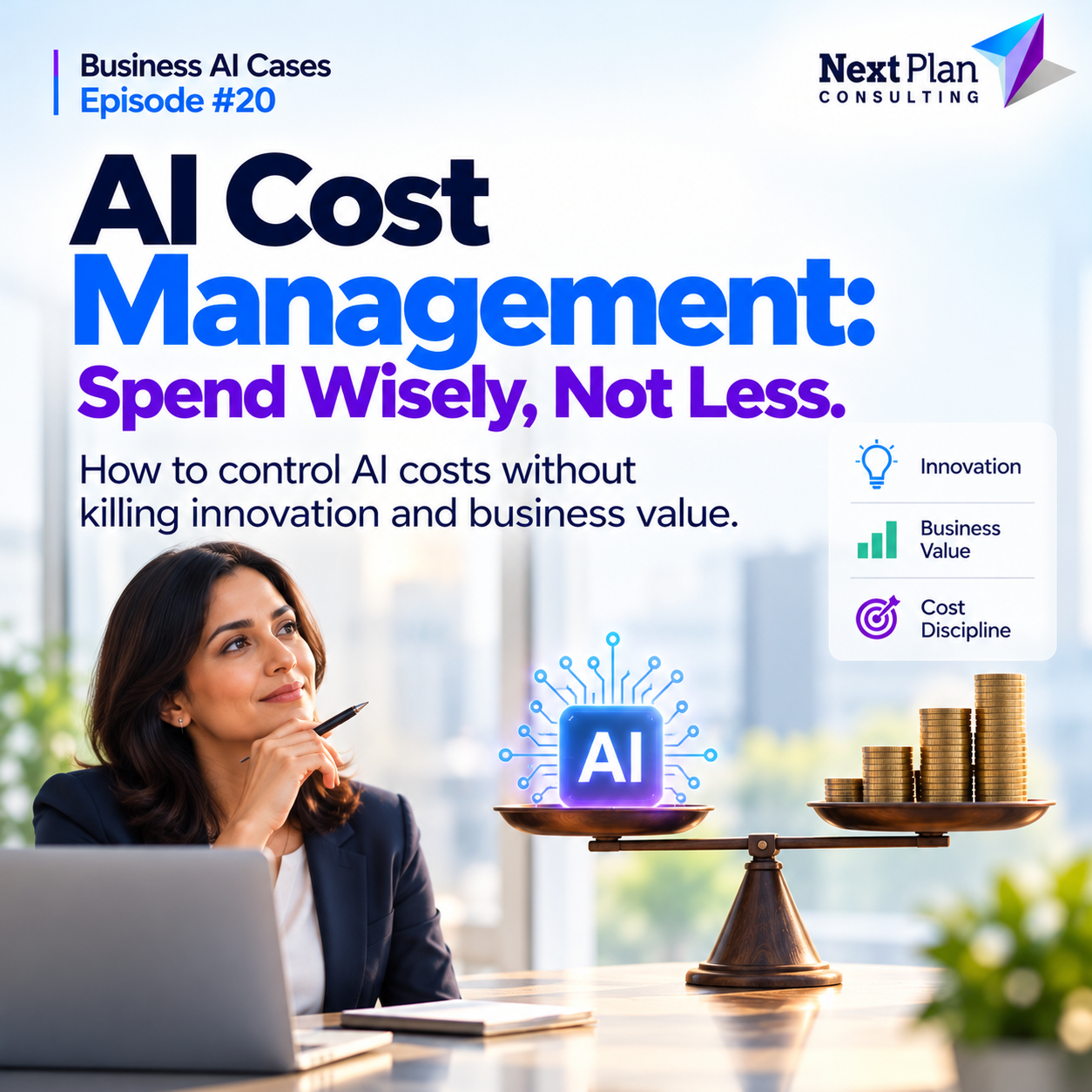
Could excessive cost control actually reduce the business value of AI?
As companies accelerate AI adoption, an interesting challenge is emerging.
AI usage is growing. So are the bills.
A recent survey article highlights how some organizations are introducing strict limits on employees' AI usage. Once employees exhaust their allowance, they may need managerial approval—or lose access until the next month.
The intention is understandable. But could such controls become counterproductive?
Imagine an employee developing an innovative AI application. Halfway through experimentation, the monthly limit is exhausted. Will that employee continue exploring new possibilities next month? Or quietly return to familiar ways of working? Cost discipline is necessary. But restricting usage is not the same as managing value.
AI expenditure is also different from traditional software costs. Beyond subscriptions, organisations may incur usage-based charges for tokens, advanced models, automated workflows, data integration and repeated processing.
An AI agent performing multiple steps can consume considerably more resources than a simple question-and-answer interaction. Therefore, businesses need to become smarter about AI economics. For example, should every task use the most powerful and expensive model? Probably not.
Routine summarization, document classification or simple drafting may work well with smaller, less expensive models. Complex strategic analysis or specialised applications may justify more capable models.
The same logic applies to pharmaceutical companies.
Using AI to improve sales-force productivity, develop high-quality business plans, accelerate medical content preparation or support commercial analytics may generate significant value.
But generating hundreds of unnecessary presentations merely because AI makes it easy could increase costs without improving outcomes.
The right question is not, “How many tokens did we consume?”
It is, “What business value did those tokens create?”
A sensible approach would combine:
Visibility into AI expenditure by team and application. Appropriate models for different tasks. Clear priorities based on business value. Measured experimentation with defined budgets. Regular reviews of cost, quality and outcomes.
At NextPlan, we believe AI adoption should move beyond enthusiasm for new tools towards disciplined business application. Organisations need to encourage innovation while eliminating waste.
The objective should not be minimum AI spending. It should be maximum business value from every rupee spent on AI.