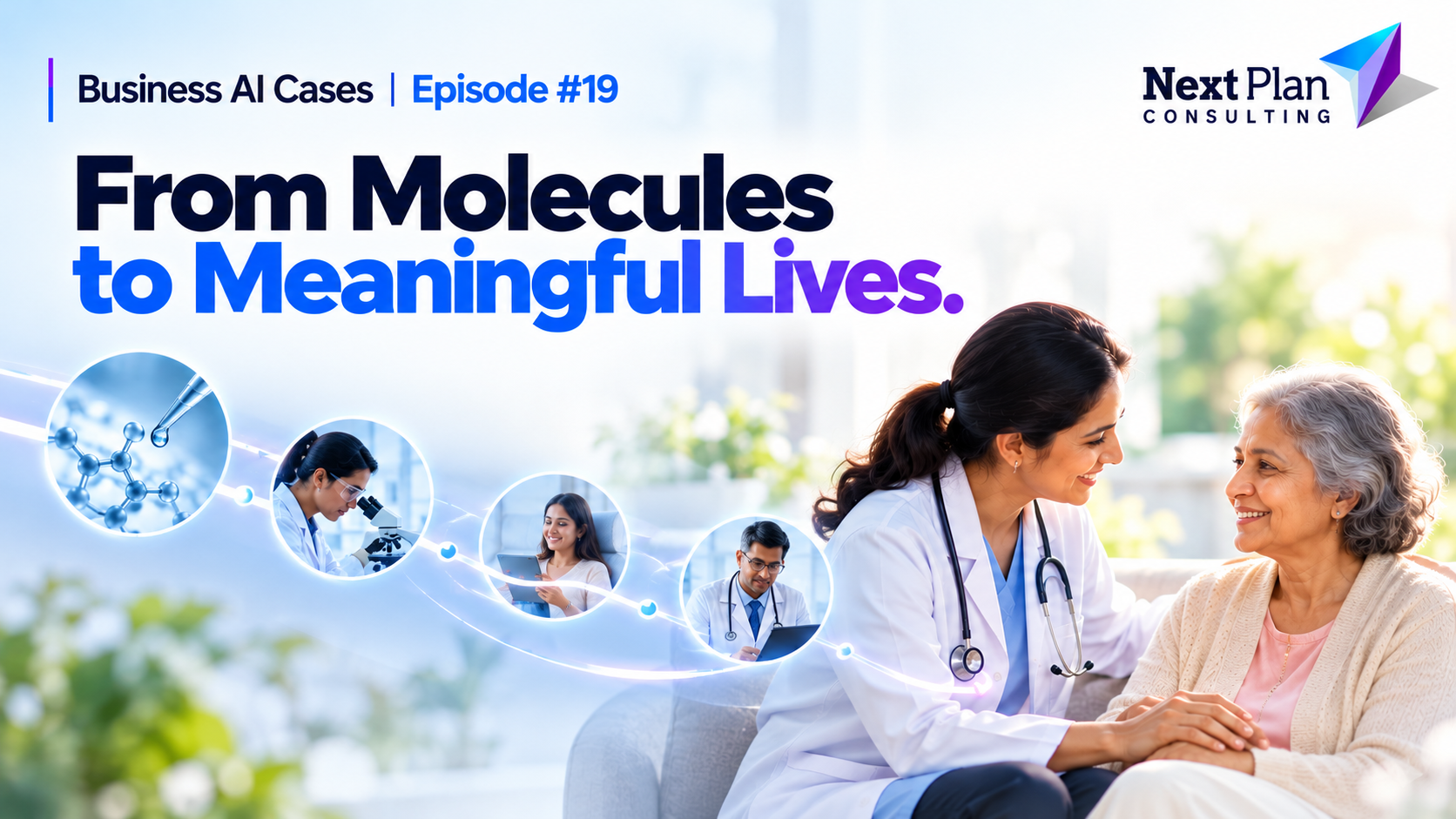
When we discuss AI in healthcare, the conversation often begins with drug discovery. Can AI identify new molecules faster? Can it improve clinical trials? Can it reduce development costs? These are important possibilities. But perhaps an equally exciting opportunity lies much closer to the patient.
Can AI improve the entire patient journey? Consider someone diagnosed with diabetes, cancer or a cardiovascular condition. The patient needs much more than a prescription. There are appointments to manage, reports to understand, medicines to take, lifestyle changes to follow and concerns that arise between doctor visits. Family members may also need information and reassurance. Unfortunately, healthcare support is often fragmented. Doctors have limited time, patients forget instructions, and continuity of care becomes difficult.
AI could help bridge many of these gaps.
Imagine a patient-support system that explains medical instructions in simple language, sends personalised medication reminders, helps patients prepare questions for their doctors and identifies when human intervention may be necessary. It could communicate in regional languages and adapt information to the patient's age, condition and understanding.
For clinicians, AI could summarise medical histories, organise reports, highlight relevant information and reduce time spent on documentation. This could leave more time for the human side of healthcare.
Meanwhile, AI is also creating opportunities elsewhere.
In drug discovery, it can help researchers identify promising targets and molecules. In clinical trials, it can support patient identification, recruitment planning, study design and monitoring. In public health, it can help analyse disease patterns and strengthen preparedness for future outbreaks.
But these possibilities must be implemented responsibly. Medical accuracy, patient privacy, clinical validation and human oversight are essential.
For Indian pharmaceutical companies, this raises an interesting strategic question. Traditionally, much of our commercial effort has focused on the doctor and the medicine. Could AI help us extend our contribution towards supporting the patient throughout treatment? Better education. Better adherence. Better follow-up. Better patient experience.
And potentially, better health outcomes.
This requires collaboration between pharmaceutical companies, healthcare providers, technology partners and patients. The opportunity is not to replace doctors or create another chatbot. It is to make healthcare more continuous, personalised and accessible.
Perhaps AI's biggest contribution to healthcare will not be measured only by how quickly we discover the next molecule. It may also be measured by how meaningfully we improve patients' lives.