We have seen Generative AI create text, images, videos and software.
More recently, we have discussed AI helping businesses execute workflows and even formulate strategy.
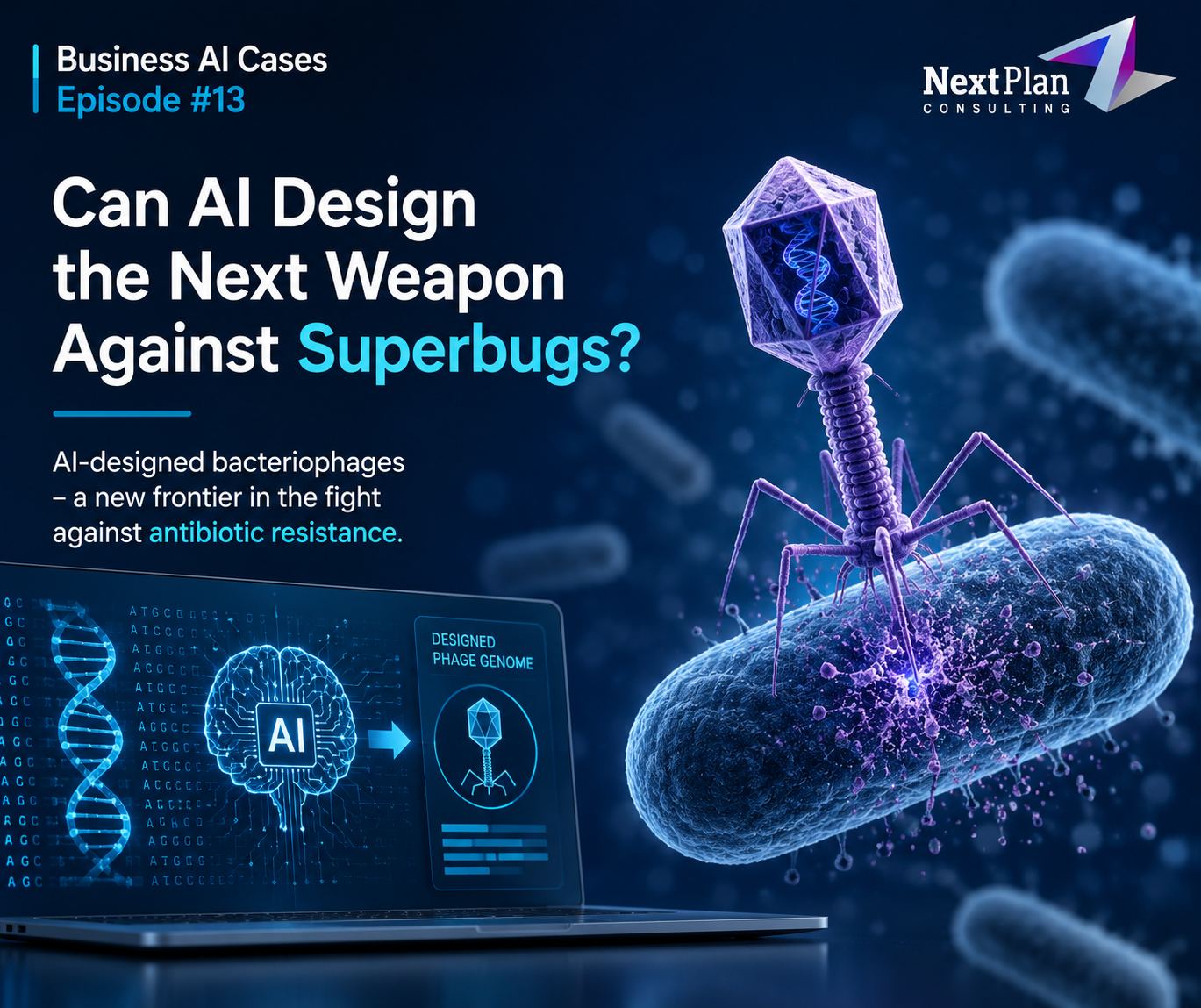
But what if AI could help design something biological? That is beginning to happen. Researchers from Stanford University and the Arc Institute have demonstrated the generative design of functional bacteriophages—viruses that specifically infect bacteria.
Bacteriophages themselves are not new. They exist abundantly in nature and have long been investigated as a possible way of fighting bacterial infections.
What is new is the role of AI. Researchers used genome language models called Evo 1 and Evo 2 to generate complete bacteriophage genome designs.
Think of the conceptual leap. An LLM learns patterns in language and generates new sentences. A genomic language model learns patterns in DNA and can potentially generate new biological sequences. But computer-generated DNA is useful only if biology accepts it. So researchers synthesized and experimentally tested the designs. From 285 AI-generated designs tested, 16 produced viable bacteriophages. Some demonstrated better fitness than the natural phage used as the starting point.
Then came an especially interesting experiment. Researchers created E. coli strains resistant to the original phage. Cocktails emerging from the diversity of AI-generated phages were able to overcome resistance in all three strains tested. Why could this matter?
Antimicrobial resistance is one of healthcare's major challenges.
Bacteria evolve. Antibiotics progressively lose effectiveness. Developing new antibacterial approaches has been difficult and commercially challenging.
Imagine a future where instead of searching nature for the right phage, scientists could use AI to explore enormous genomic possibilities and design phages targeted towards particular bacteria.
We are certainly not yet talking about a replacement for antibiotics.
These experiments involved non-pathogenic laboratory strains of E. coli. Phage therapy itself faces challenges including host specificity, delivery, stability, bacterial resistance, regulation and clinical validation.
But from a pharmaceutical R&D perspective, the larger message is fascinating.
AI is progressively moving deeper into the innovation process: From analysing scientific information. To predicting molecules. To designing proteins. And now—to designing functional genomes.
Perhaps Generative AI's most profound creations will eventually not be the content we read on our screens. They could be new biological solutions that did not previously exist. For pharmaceutical and healthcare leaders, that possibility deserves attention today.
hashtag#BusinessAICases hashtag#ArtificialIntelligence hashtag#GenerativeAI hashtag#NextPlanConsulting