AI is helping organizations perform specific tasks. Create content. Personalize communication. Recommend products. Accelerate R&D. Support doctors. Even execute business workflows. But are we now ready for something much bigger?
Can AI help formulate strategy itself? A recent Harvard Business Review article, “AI Is Revolutionizing Strategic Decision-Making,” raises some fascinating possibilities.
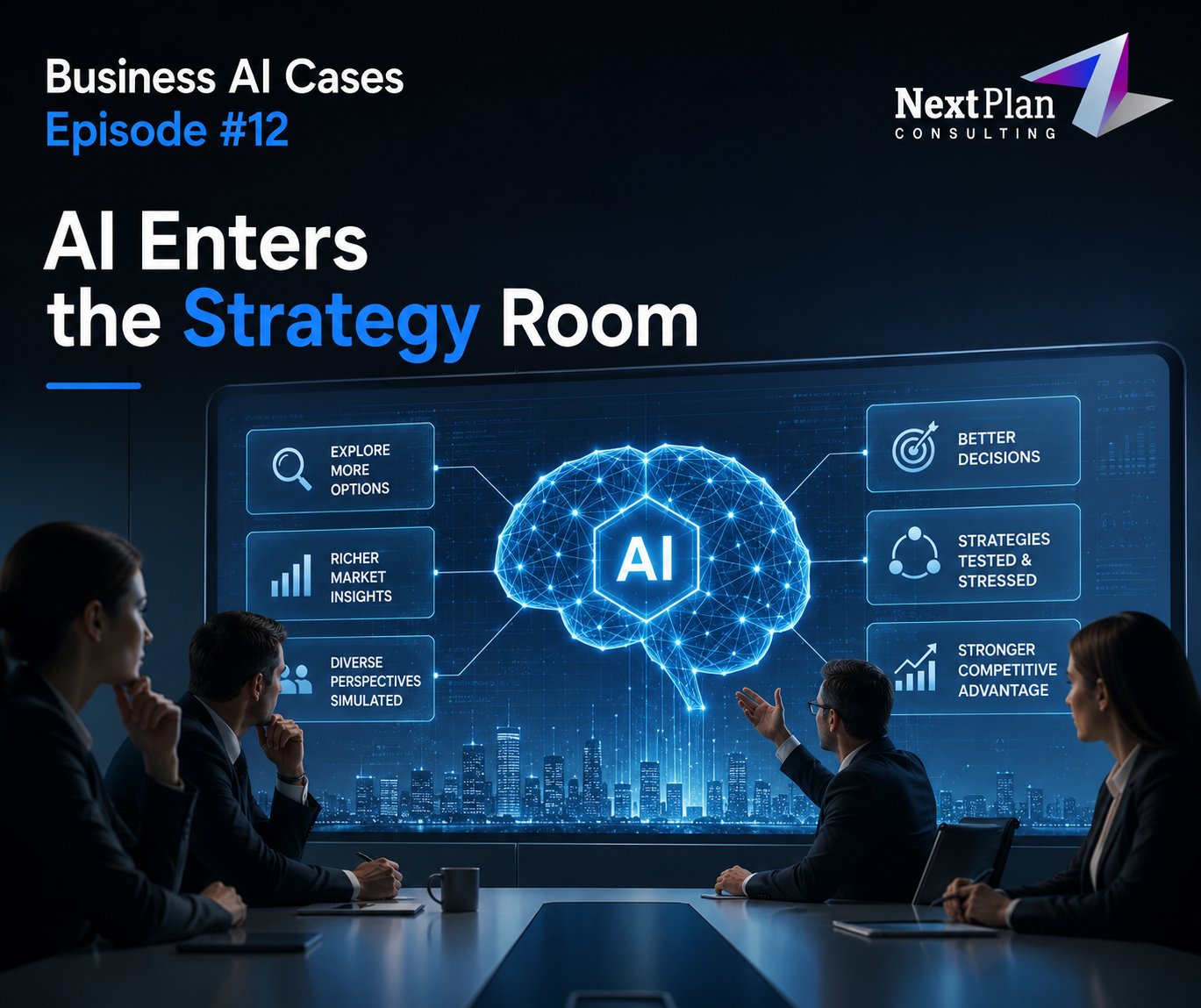
Think about a typical strategy meeting. A management team analyses the market, discusses several possibilities and eventually chooses between perhaps three or four serious strategic options. But were these really the best options?
Or simply the best options that a group of human beings—with limited time, information and mental bandwidth—could generate? AI changes this constraint. Instead of considering 10 possibilities, AI can potentially generate and screen hundreds or thousands before management even enters the room.
One example quoted in the HBR article is striking.
A software company used Generative AI combined with a database of more than 40 million companies to search for acquisition opportunities. In less than a day, the system identified and scored more than 500 potential targets, narrowed them to 15 serious leads—and ultimately supported three acquisitions.
That is not merely doing the same analysis faster. It is exploring a possibility space that humans could hardly have explored before. AI can create another advantage. Most strategy tools give us a snapshot. Market maps. Segmentation. Competitive analysis. Demand forecasts. AI can potentially turn these into living models, continuously incorporating new information about customers, competitors and markets.
And perhaps most interestingly, AI can challenge our thinking. Imagine one AI agent developing the strongest argument for your proposed strategy. Another deliberately trying to destroy it. A third behaving like your competitor and deciding how it would respond. Others representing customers, regulators or your sales teams. Before management makes the final decision, the strategy has already survived multiple simulated challenges.
For pharmaceutical leaders, imagine applying this to:
Which therapy area should we enter? Which brands should receive disproportionate investment? Should we acquire, license or develop?
How might competitors respond to our launch?
The strategist of tomorrow may spend less time gathering information and populating frameworks—and more time framing the right questions, challenging assumptions and exercising judgment.
AI is therefore moving rapidly up the organizational hierarchy:
From doing tasks. To executing processes. To supporting decisions.
And now—to helping shape strategy. For business leaders, that makes AI much more than a productivity tool. It is becoming a strategic capability.
hashtag#BusinessAICases hashtag#ArtificialIntelligence hashtag#NextPlanConsulting