Almost everyone has now experimented with Generative AI for content creation. Write a LinkedIn post. Draft an email. Create a product description.
Summarize an article. The results can be impressive.
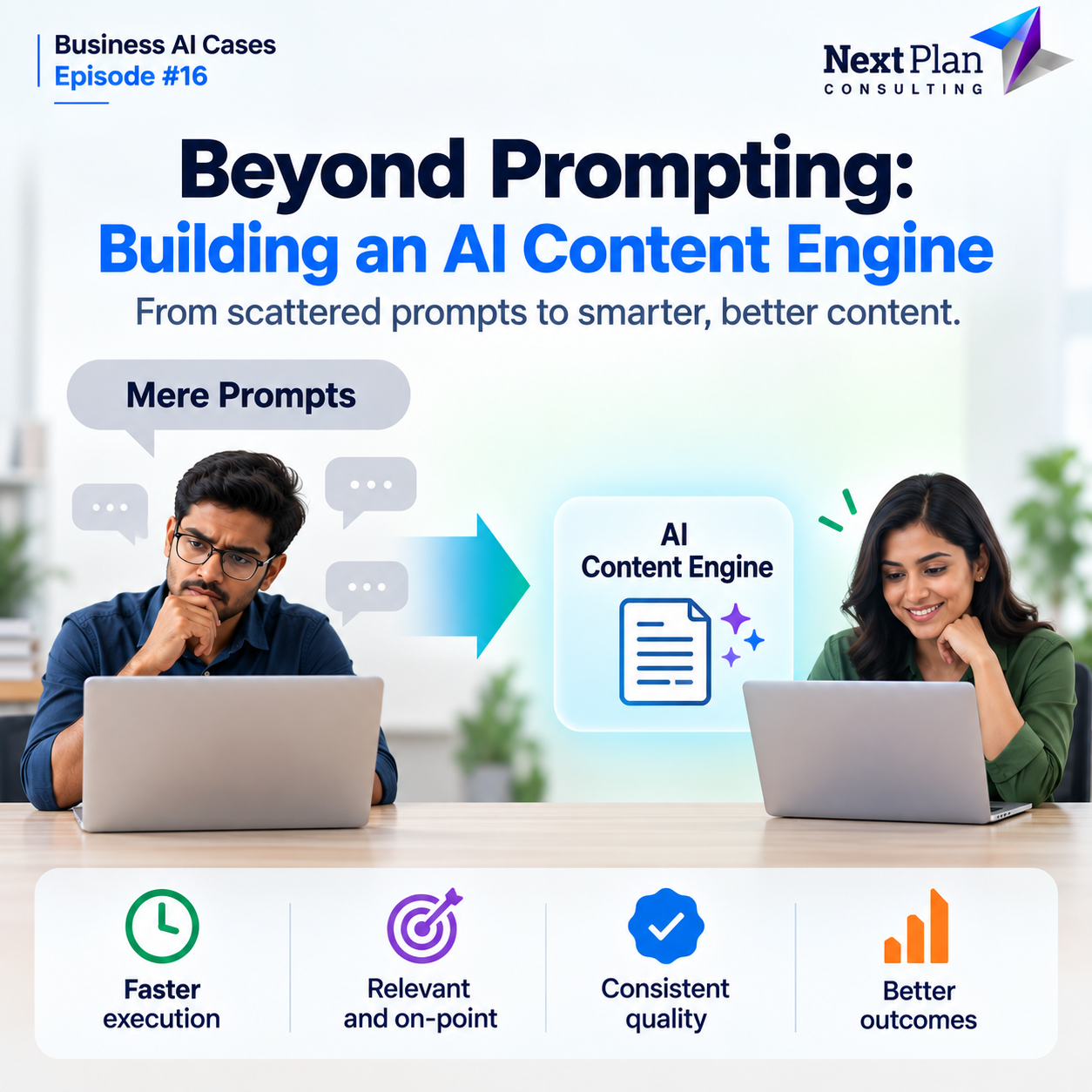
But there is a limitation. Every time, we start prompting again. We explain the purpose, provide background information, specify the audience, correct the tone, ask for recent information and finally edit the output. What if AI could remember how the job needs to be done and automatically access the right information before creating anything?
That is where the next opportunity is emerging.
Instead of using an AI model alone, businesses can build a content engine around it. Imagine a pharmaceutical marketing team preparing regular communication for doctors. The system could automatically refer to the latest approved product information, clinical studies, treatment guidelines, previous campaigns and company-approved claims.
It could understand that one communication is for a specialist doctor, another for the field force and another for patients. It could follow predefined rules for length, language and tone. It could even learn from previously approved content—what was accepted, what needed correction and what worked well.
Then, rather than repeatedly giving 10–15 instructions, the user might simply ask: “Prepare this month's communication for cardiologists.”
Behind that simple request, AI agents can perform different jobs—find relevant information, select useful evidence, draft the communication, check it against defined requirements and prepare the final version for human review.
RAG (Retrieval-Augmented Generation) adds another important capability. Instead of depending only on what the AI originally learned during training, it can retrieve information from current and trusted sources before creating the content.
The business advantage therefore goes beyond faster writing.
It can mean: Fresher information. Greater consistency. Less repetitive prompting. Better use of organizational knowledge. Faster execution.
And importantly, people remain responsible for reviewing and approving the final communication—particularly in regulated industries such as pharmaceuticals.
Perhaps we should stop thinking of Generative AI merely as a better writer.
The bigger opportunity may be to build an AI-powered content engine that understands the job, finds the right information and follows the process.
That is a very different level of business application. “The question isn’t whether AI can write better—it’s whether your organization is ready to build a content engine that transforms how work gets done.”